

-
Examples of Fruit-Bearers: Paul and an Example of Paul Today
 Written by Gaby Medrano, volunteer with Iron Rose Sister Ministries in Nicaragua
"I have fought the good fight, I have finished the race, I have kept the faith"(2Ti 4:7 NIV).
This verse, which summarizes the legacy of the apostle Paul, continues to inspire millions of believers around the world. Paul went from persecuting Christians to becoming one of the greatest preachers of the Gospel. His life was transformed by Christ, and since then, he dedicated his time to sharing the good news, discipling believers, and planting churches—a missionary par excellence.
The fruit of his ministry was not only seen in the congregations he founded, but also in the lives he spiritually formed. In the Bible, we can see that he had several spiritual children— brothers whom he taught, accompanied, and helped to grow spiritually, such as:
"To Timothy, my true son in the faith: Grace, mercy and peace from God the Father and Christ Jesus our Lord."(1Ti 1:2)
"To Titus my true son in our common faith: Grace and peace from God the Father and Christ Jesus our Savior."(Tit 1:4)
He also wrote:
"Even if you had ten thousand guardians in Christ, you do not have many fathers, for in Christ Jesus I became your father through the gospel."(1Co 4:15)
These verses show how the apostle Paul produced lasting fruit by forming spiritual children who continued to teach and strengthen God's work. Their example continues to inspire Christians today to invest in the spiritual lives of others and to leave a legacy of faith that will endure for generations.
Who would be a Paul today?
In our day, a Paul can be a person who invests time in the spiritual lives of others. He is not necessarily a recognized pastor, preacher, or leader; it may be a Sunday school teacher, a home group leader, a Christian mother, an evangelist, a ladies' leader, a small group teaching leader, or a believer who leads others to the feet of Christ.
A current Paul is someone who:
- Shares the gospel with love.
- Teaches God's Word.
- Accompanies new believers in their spiritual growth.
- Prays for their children in the faith.
- Sets an example with their testimony and conduct.
Our Lord Jesus taught that the true disciple produces fruit that abides.
Paul's life and his incomparable abilities were precious to God. Paul gave himself to Him without reserve. God used all of his training, education, intelligence, and personality. God had a willing servant who gave all of himself until his last breath. Like Paul, you have unparalleled gifts and abilities that make you of great value to God's service.
Throughout the Bible, the word “fruit” refers to evidence from within. If what is inside a person is rotten, the fruit of that person's life will also be bad. Anyone who knows Christ and is baptized has Jesus Christ living within them and must bear good fruit—the fruit of righteousness (Php 1:11)—as God shines in his life. The fruit of the Spirit has been described as those gentle customs which the Holy Spirit produces in the Christian. In Galatians 5:22-23, the apostle Paul lists such gentle customs, the gifts of grace: "But the fruit of the Spirit is love, joy, peace, forbearance, kindness, goodness, faithfulness, gentleness and self-control."
Walking in the Spirit means:
- Living every moment in submission to God with integrity.
- Trying to please God with the thoughts we choose to harbor, the words we choose to speak, and the actions we choose to take.
- Letting Him guide and transform us every step of the way. Letting Him work within us so that we can glorify God.
Now, my dear sister, let me quickly tell you that walking in the Spirit doesn't mean you won't have difficult days. It means drawing on the resources God has provided for you to manage your impossible day and face it God's way, enjoying His grace, His strength, and His power. You will be able to handle difficulties calmly, and you will have everything under control, thanks to the assurance of peace, patience, and temperance that God gives you through the Spirit. And always keep these two truths in mind: the Holy Spirit speaks to you when you read God's Word, and if you walk in the Spirit, the Holy Spirit will bear fruit in your life.
Are you willing to let God take your life with all your qualities, including your faults, and put them at His service? Or are there some areas of your life that you reserve for yourself?
You'll never know what God can do through you until you allow Him to use every part of you, living and being a servant to His glory.
-
Following the Example of Eunice and Lois
 Written by Naraiane Silva, volunteer with Iron Rose Sister Ministries in Ponta Grossa, Paraná, Brazil
I am reminded of your sincere faith, which first lived in your grandmother Lois and your mother Eunice and, I am persuaded, now lives in you also.(2Ti 1:5 NIV)
Telling people what to do is a far cry from showing people what to do.
When I merely utter words hoping someone will act, it's unlikely that person will do so, and if that person is my son or daughter, the probability decreases even further. However, when I put my words into practice, the chances of being heard are much greater. We see Eunice and Lois applying this in practice with their son and grandson Timothy. They were Jewish and converted to Christianity in Lystra after hearing a sermon by the apostle Paul, and from then on, with great zeal, they instructed Timothy in the principles of God's Word.
These commandments that I give you today are to be on your hearts. Impress them on your children. Talk about them when you sit at home and when you walk along the road, when you lie down and when you get up.(Dt 6:6-7)
This mother and daughter did such important work together through Timothy that they have become an inspiration to us today.
And Timothy's father? He was Greek and probably died in the early years of his son's life.
And what about the fathers of our generation? Some have died like Timothy's father, others fulfill their roles as fathers, and still others leave the spiritual responsibilities of their children in the hands of the women. The fact is that many mothers find themselves alone in the responsibility of leading their children to God. I myself am one of those mothers.
I began serving God when my son was nine years old, and my daughter was one year old, and I can say that I have spent many years praying for both of them. I have led them to God through my examples of faith in practice, in everyday life. I have taught them to pray, but they need to see me praying.
The prayer of a righteous person is powerful and effective.(Jas 5:16b)
I have taught them to be grateful, but they need to see me being grateful. I have taught them to be generous, but they need to see me being charitable. I have taught them to ask God when they need something, but they need to see me being dependent on God first. Genuine faith develops through practice, not just theory.
In the same way, faith by itself, if it is not accompanied by action, is dead. (Jas 2:17)
This faith, which was seen in Timothy and mentioned by the apostle Paul, was likely practiced in every meal, in every devotional time, in every nightly prayer, and in observing the attitudes of his mother and grandmother.
Eunice and Lois are notable for the seed of the gospel planted in Timothy; their dedication was recorded to inspire women like me, who need a lot of courage and dedication to fulfill the beautiful ministry that is motherhood.
Let us not become weary in doing good, for at the proper time we will reap a harvest if we do not give up. (Gal 6:9)
Today my son is 15 years old, and my daughter is seven, and they face constant challenges that can only be overcome with God. I believe that my secret tears are being dried and my heavy burden is becoming light through my true faith in Christ Jesus, our Lord and Savior.
Those who sow with tears will reap with songs of joy.(Ps 126:5)
This is the faith I want my children to develop, and this is the faith that will be awakened in them if they see me praying, reading the Bible, meeting with my brothers and sisters, and leading a worthy and devout life.
Follow my example, as I follow the example of Christ. (1Co 11:1)
It is small, consistent daily actions that lead children to Heaven.
-
Jesus Called His Disciples to Bear Fruit
 Written by Wendy Neill,volunteer with Iron Rose Sister Ministries in Arkansas
When Jesus was on the earth, His pattern was to go from town to town, teach people about the Kingdom of God, and back it up with the authority to heal and do miracles. His ministry bore abundant fruit as people believed, repented, and followed Him.
But Jesus knew His time on earth was short. Part of His bearing fruit was to teach others to do the same. John Mark Comer, in his book Practicing the Way, points out that Jesus used the same methods as other rabbis of His time. He chose His disciples, had them be with Him, become like Him,then do as He did.As apprentices to Jesus, these are the same steps we should follow. We must spend time in His presence, become like Him in the way we live, and do as He did. Only then can we bear fruit.
In Matthew 10, the time had come for the Twelve to advance to the last phase: doing as He did. Jesus told them to go throughout Israel and gave these instructions:
As you go, proclaim this message: 'The kingdom of heaven has come near.' Heal the sick, raise the dead, cleanse those who have leprosy, drive out demons. Freely you have received; freely give.(Mt 10:7-8 NIV)
In the parallel passage in Luke 9, it says “So they set out and went from village to village, proclaiming the good news and healing people everywhere” (Lk 9:6). In Mark 6, we read, “They went out and preached that people should repent” (Mk 6:12). The disciples were not sent with a different message than Jesus preached. Likewise, if we want to bear fruit today, our message remains the same:
- We have good news!
- The Kingdom of God is near.
- Repent: turn away from sin and toward God.
We also find out in Mark’s account that Jesus sent them two by two. God knows our fruit bearing is maximized when we help one another, especially since we will face persecution. Jesus doesn’t sugarcoat it. He warns the Twelve that they will be “like sheep among wolves,” that some will not welcome them or listen, that they will be hated, and that some of them will even be arrested and flogged (Mt 10:16-22). But in verses 26-31, He reiterates three times, “do not be afraid.” He backs that up with a promise: "Whoever acknowledges me before others, I will also acknowledge before my Father in heaven” (Mt 10:32).
Do you find yourself scared to share your faith? Let this story remind you of a few important things:
- Learning to share your faith is easier with a buddy.
- You will probably get pushback, and it might be severe.
- Don’t be afraid.
- Jesus will welcome you to Heaven if you acknowledge Him before men.
In Luke 10, Jesus expands His team beyond the Twelve.
After this the Lord appointed seventy-two others and sent them two by two ahead of him to every town and place where he was about to go. He told them, "The harvest is plentiful, but the workers are few. Ask the Lord of the harvest, therefore, to send out workers into his harvest field. (Lk 10:1-2)
Their job was to prepare people’s hearts to accept Jesus when He came to them, and to ask God for even more workers to glean the harvest of souls. The sending of the 72 shows that fruit bearing was never meant to belong only to the apostles. Jesus widened the circle. More workers were needed because the harvest was—and still is—plentiful.
Jesus intentionally multiplied His ministry by preparing disciples and sending them out. First came the Twelve, then the 72, and eventually all believers who would carry the gospel to the world. The same invitation remains for us today. As we spend time with Jesus, become more like Him, and step out in faith to do as He did, He can use us to prepare hearts, share the good news, and gather a harvest for His Kingdom. The harvest is still plentiful.
How might God be asking you to bear fruit by sharing the Good News with someone in your family, neighborhood, or community?
-
Surrendered Lives
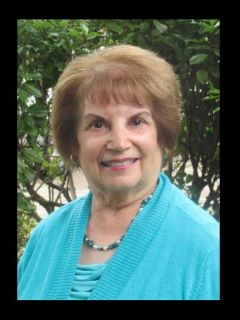 Written by Deanna Brooks, volunteer with Iron Rose Sister Ministries in Arkansas
Have you noticed how sometimes God does the unexpected?
When we read Matthew’s genealogy of Jesus, five women are listed in the group. Why are these women listed? None of them would have been accepted by the religious leaders for various reasons, but our Heavenly Father chose them to be in the ancestral lineage of His Son.
Tamar - She probably was a Gentile… not an Israelite. She married the two older sons of Judah, who were each described as wicked (Ge 38:7,10). Tamar pretended to be a prostitute when she realized Judah was not going to allow her to marry the third son. One of the twins she bore from the encounter with Judah became an ancestor of Jesus.
Rahab - She was a Canaanite, a resident of Jericho, described as a prostitute or harlot. When the spies entered her city, she gave them refuge. Then, she told them that she knew what their God had done in Egypt and through the years, and asked for protection when they came to conquer Jericho (Jos 2:8-13). Rahab is mentioned as having faith in Hebrews 11. She and her family were saved during the destruction of Jericho because she gave a friendly welcome to the spies. She married Salmon, an Israelite, and was the great-great-grandmother of King David.
Ruth - She was from the land of Moab. Deuteronomy 23 prohibits marriage with Moabite men, because they had not welcomed the Israelites as they were passing through the land on their way to the Promised Land. Ruth had accepted the faith of Naomi and become a follower of YHWH (Ru 1:16). She returned with Naomi to Bethlehem and cared for her. Ruth married Boaz, son of Rahab, and she was the great-grandmother of King David.
Bathsheba - She was an Israelite married to Uriah the Hittite, one of David’s mighty men. King David took Bathsheba into his private chamber while Uriah was away at war, and she became pregnant with David’s child (2Sa 11). Was she a willing participant, or did she resist? Scripture does not say. She would probably have been bathing in an enclosed courtyard with an open roof when David saw her. Only someone who was at a higher elevation could have seen her. I believe it is fair to say David took advantage of a situation he accidentally encountered, and because of his power as king and the status of women, she probably could not resist. When David arranged the death of Uriah, he took Bathsheba as his wife. She gave him four sons after the first one died. Nathan was the third son of the four who lived and was in the lineage of Jesus.
Mary - She was an Israelite to whom the angel Gabriel appeared and told her that she would become the mother of God’s Son. We aren’t told what went through her mind as she realized she was facing a pregnancy out of wedlock… a situation where there would be whispers and accusations… a situation punishable by stoning. Mary’s submission is seen in Luke 1:38 when she tells Gabriel, “Behold, I am the servant of the Lord; let it be to me according to your word” (NIV).
Each of these women was in a circumstance they did not create, and which was beyond their control. God used them to serve His purpose… just as He can use each of us.
Take a look at the situation each faced and think about how you might have responded.
Tamar was widowed twice and bore twins through an illicit relationship.
Rahab was a harlot, entertaining men for a living, but gave protection to the spies.
Ruth was widowed and left her homeland to care for her mother-in-law.
Bathsheba was a married woman, called by the king for an adulterous evening and became pregnant while her husband was away at war. She is thought by many scholars to be the woman mentioned in Proverbs 31 who advised King Lemuel, possibly a nickname for King Solomon.
Mary found favor with God, was engaged to Joseph, but she was carrying a child out of wedlock… a pregnancy with a story many would not believe.
Each of these women trusted in God.
Do we trust in God when life circumstances take us down an unexpected path?

See more photos on our Photo Gallery page.
(c) Iron Rose Sister Ministries. Site setup by Perfect Fit Web Design; Flag icons by Free Flag Icons