

-
Rooted or Simply Occupied
Written by Sharit Saman Zapata, volunteer with Iron Rose Sister Ministries in Peru

Imagine a tree in the desert that, from afar, seems strong and robust, but when you get closer, you discover that it is dry, without sap or fruit, and rotten inside. Its strength was only an appearance. Now imagine another tree by a river, full of fruits and shiny leaves; it does not struggle to survive, it grows calmly, and that is why it overflows with life.
Which of the two trees is more like our spiritual life?
Blessed is the one who does not walk in step with the wicked or stand in the way that sinners take or sit in the company of mockers, but whose delight is in the law of the Lord, and who meditates on his law day and night. That person is like a tree planted by streams of water, which yields its fruit in season and whose leaf does not wither—whatever they do prospers.(Ps 1:1-3; NIV)
Many of us, after years in the Church, learn to see ourselves well from afar: we speak like Christians, we move in environments of faith, we master biblical passages and practice disciplines... but inside, something does not grow. The dangerous thing is to stagnate, to get used to living like this, to do the "right" things without satisfaction: we pray, we read the Bible, we surround ourselves with Christians... and we are still empty.
This is a real struggle, but we should not allow ourselves to remain in this state for long or settle. There is a big difference between being busy with things of God and being really rooted in Him.
Some tips we can take from Psalm 1:1-3:
- Stop walking where you shouldn't.
"the one who does not walk in step with the wicked..."
Before speaking of roots, the psalmist points in the direction: how can we grow in God if we listen to voices and make decisions that lead us away from Him? It is like a tree in dry ground: its fruits, if there are any, will be contaminated. Jesus said, "No one can serve two masters. Either you will hate the one and love the other, or you will be devoted to the one and despise the other" (Mt 6:24). Many times, we do not grow because we have our hearts divided between obedience and comfort and we do not want to let go of what prevents us from moving forward.
- Stop "trying" and start reveling.
"whose delight is in the law of the Lord."
Here we are going to find the real problem: it is not a lack of discipline; it is a lack of delight. You can read the Bible every day and still be dry, we can pray and still be empty, all this because God is not looking for routines: He is looking for genuine love. And if we think about it, no one needs reminders to do something they love. Psalm 42:1 says, "As the deer pants for streams of water, so my soul pants for you, my God." That is our reference, it is not an obligation… it is hunger. If your relationship with God feels heavy, it is not a problem of agenda... It's a heart problem. This is because a tree should not simply visit water, it should live connected to it.
- Stay, don't just pass by.
"who meditates on his law day and night"
Sometimes we treat God as a quick stop: a short devotional, a prayer before bed, a song on the road, while the rest of our life is disconnected. Jesus says, "apart from me you can do nothing" (Jn 15:5). It doesn't just say a little, it says NOTHING. It is like a state-of-the-art cell phone—although it has all the potential, without being charged or connected, it is useless. So is your spiritual life if you do not abide in Him.
- The fruit will be inevitable if the roots are real and firm.
"That person is like a tree planted by streams of water, which yields its fruit in season"
Many people get frustrated looking for immediate fruit, but the passage says it will be in due time. Like the tree that stands by its source, without comparing or forcing itself, it only strives to stay at its source, then the fruit comes naturally. In Galatians 5:22–23 we see the fruit of the Spirit: love, joy, peace,... This fruit grows when we are connected. If there is no fruit, the problem is not the fruit, but the roots.
You don't need another spiritual strategy or a perfect plan; you need to decide TODAY where you are planted. You can be busy with Christian stuff or be a really rooted woman by the river. Those two things are not the same. How much longer are you going to settle for a life that seems strong on the outside, but is dry on the inside?
-
Sarah’s Shortcut to Bearing Fruit: Trusting That God Will Bring the Growth
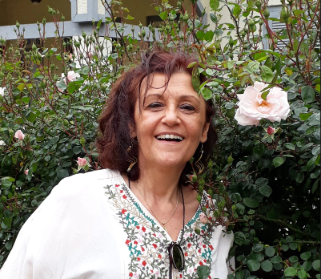 Written by Luzia Casali, volunteer with Iron Rose Sister Ministries in Rio Grande do Sul, Brazil
When I was a teenager, I was extremely impulsive. Impatient. I wanted everything done yesterday. Toward the end of high school, my father gave me something to think about:
"Luzia, it takes a hen 21 days to hatch an egg at a temperature of 98.6°. What would happen if I raised the temperature to 120°?"
I replied, "The egg would cook; there would be no chick."
He asked again, "What if I took the egg away from the hen after 15 days?"
I answered, "The chick wouldn't be ready."
The moral of the story: In life, there is a right time for a task to be completed—neither sooner nor later.
Just as I had an earthly father who gave good advice, we have a Heavenly Father who guides us in Jeremiah 29:11 (NIV): "For I know the plans I have for you," declares the Lord, "plans to prosper you and not to harm you, plans to give you hope and a future."
He is the One who holds the plans for each of us. These plans cover every area of our lives and unfold according to His timing.
Discipleship training is one of those. We need to pray and trust God throughout the process.
The Bible gives us an example of someone who tried to remove the egg before the chick was ready and suffered the consequences.
Let’s consider the case of Sarai in Genesis 16. God had made three promises to Abram in Genesis 13: a son, the land, and the Descendant. It was God Himself who made the promise, stating that Sarai would have a son. Feeling that the process was taking too long, she took matters into her own hands. She offered her Egyptian slave, Hagar, to Abram, and Hagar conceived. Believing herself superior to her mistress because she was able to get pregnant, Hagar began to look down on Sarai. Sarai, feeling disrespected, began to mistreat Hagar—with Abram’s consent. Unable to bear the pressure, Hagar fled into the desert (pregnant, without food or water). However, our merciful God intervened and sent an angel who told her to return and submit to Sarai. Yet, He instructed Hagar to name her son Ishmael—which means "God hears"—and prophesied that he would be a rebellious and independent man, constantly in conflict with others.
The Ishmaelites were, in fact, a contentious people, living in constant hostility toward all their brethren (Ge 25:17–18).
They were nomadic traders who even dealt in slaves. We must not forget that it was the Ishmaelites who bought Joseph from his brothers (Ge 37:28).
Although Sarai took the egg before it hatched, God honored the promise He had given to Abram. Nevertheless, consequences followed—specifically, the Ishmaelites' conflict with other peoples. Yet God did not change His plans; He fulfilled the promise made to Abram: Isaac (the son), Israel (the nation), and our Lord and Savior Jesus Christ (the Descendant).
Likewise, we cannot rush the training of disciples. There is a right time for each one to mature in faith and bear fruit. We must always bring disciples, their studies, and their quality time with the Father before the Throne of God.
If we remove the egg too soon—fail to allow sufficient time for the disciple to be prepared for work in the Church—there can be various consequences. Here are a few of them:
- Burnout and Frustration: The disciple faces responsibilities without the means to handle them, leading to stress, frustration, and discouragement—failing to disciple others and, in the worst-case scenario, an abandonment of the faith.
- Division and Conflict: Immaturity and/or a lack of proper knowledge can lead to hasty decisions or unwise use of the Word, causing friction within the congregation.
- Departure from Sound Doctrine: Without adequate knowledge, the disciple may compromise the preaching of the pure Word.
- Wounds within the Congregation: Unprepared individuals can emotionally hurt other members due to a lack of discernment or psychological and/or spiritual preparation.
Just as God had plans to send the Savior—plans that were not obstructed—we must realize that making disciples is part of God's plan: training them to make other disciples (Mt 28:19–20) and trusting that He is the One who brings the growth (1Co 3:6). We cannot try to take matters into our own hands as Sarai did because there will be consequences.
My comfort lies in knowing that, just as God did not change His plans to send the Savior, He will not change His plans for the Word to be preached.
May God bless us.
-
Set Your Mind on Things Above
 Written by Ana Carolina Mourão, volunteer with Iron Rose Sister Ministries in Campo Grande, Brazil
Since, then, you have been raised with Christ, set your hearts on things above, where Christ is, seated at the right hand of God. Set your minds on things above, not on earthly things. For you died, and your life is now hidden with Christ in God. When Christ, who is your life, appears, then you also will appear with him in glory. (Col 3:1-4 NIV)
I found it interesting Colossians 3:2 was the suggested verse for this blog: Set Your Mind on Things Above. This is a struggle I have with my mind and which has been unfolding for some time. I believe we all face this battle. When I reflect on this verse, I think “If my mind stays and works on things that are from above, then it is filled with what is good and there is no time left for the things of the world.”
Our whole life is for the Lord’s honor and glory. Sometimes we fail, sometimes we judge, but only God is the true judge, and this Judge gave us such grace by sending Jesus to die on the cross in our place.
This is my prayer: Father, I ask you for forgiveness because I sin, but I thank you for your mercy, Lord. I give you my life. I thank you for reaching so many sisters and as long as I live, I believe in your healing. I thank you for the sisters who pray for me, Lord, because I believe in the power of prayer. In the name of Jesus, amen.
A good way to occupy your thoughts with things above is to ask yourself: What do I love to do for the Lord? In my case, it is working with the little ones; playing with them, doing theater, and making fun classes. And you? What is your gift? Invest in it. That's your TALENT. Do you remember this beautiful parable? To each is given their talent, and the one who multiplies it hears, “Well done, good and faithful servant! You have been faithful with a few things; I will put you in charge of many things. Come and share your master's happiness!” (Mt 25:21).
May our thoughts remain on things above. And what are these things? These would be things that involve the Lord, His church, the brotherhood, widows, and orphans, as this is true religion (Jas 1:27). When we help with visits, women's classes, coffee and tea for church events, and preparing the Lord’s Supper, we are taking care of things from above.
“But the fruit of the Spirit is love, joy, peace, forbearance, kindness, goodness, faithfulness, gentleness and self-control. Against such things there is no law” (Gal 5:22-23). I would like to highlight one of the fruits of the spirit, kindness, and talk about a brother, Fonseca, the greatest example of kindness I have ever seen on earth. He fought the good fight and left a legacy, three daughters and his wife, with the same good heart. With my own eyes, I saw him buy a bag of food and give it to a family who needed it. His kindness was always immense. Anyone who knew him has to hold back tears when talking about him. “Let us not become weary in doing good, for at the proper time we will reap a harvest if we do not give up. Therefore, as we have opportunity, let us do good to all people, especially to those who belong to the family of believers” (Gal 6:9-10).
We must always do good to everyone, especially those in the family of faith (Gal 6:10). In fact, it is something which should not need to be mentioned it should be inherent to who we are like in the stadiums where the Japanese collect the garbage without anyone asking.
And think of Jesus, who had all the fruit of the Spirit? With His kindness and mercy, after a life of sacrifice, He died for me and for you. May we keep our minds on things above in preparation for His return!
-
She Did Her Part and Let God Be God
 Written byLiliana Henríquez, volunteer for Iron Rose Sisters Ministries in Colombia
One of the most challenging tasks for a human being is to let go of egocentrism and adopt a position of total surrender to God. We mistakenly believe we are all-powerful, but the truth is that nothing moves without God’s will.
When we look at the life of Jesus, we see that He was obedient in everything, even though, humanly speaking, He faced the unimaginable pain of crucifixion. Who would willingly offer himself to endure such intense physical suffering as dying on a cross? Jesus did! And because of this, you and I don’t have to pay for our sins—we have eternal life. In the pivotal moment of His death, Jesus fully surrendered to God and His will, saying, “Father, into Your hands I commit My spirit” (Lk 23:46, NIV).
In our daily lives, we must “crucify ourselves” repeatedly, or in other words, set aside our own desires and make sacrifices for a higher good.
We set aside our desires to prioritize those of our partner...
We set aside our rest to choose to play with our children...
We set aside our comfort to serve others with love...
We set aside what we want and focus on fulfilling God’s calling for our lives.
In the spiritual realm, things operate under the principle of total surrender to God. Those of us who have accepted Christ as Lord understand that we no longer live to satisfy our own desires, but to fulfill Christ’s (Gal 2:20). We know that those who want to be exalted must humble themselves. Those who want to be served must serve. Those who want to be loved must love. Those who want to receive must give.
This doesn’t mean we always agree with God’s plans. Often, we don’t. In fact, many times, we feel upset because we don’t understand why He asks us to do things that seem “illogical” or outside our comfort zone. However, a true servant of God surrenders because she knows WHOM she is serving and follows the example of Jesus on the cross saying, “Father, if you are willing, take this cup from me; yet not my will, but yours be done” (Lk 22:42).
A true servant does her part with a surrendered heart and in complete obedience to God—and lets God be God. We don’t need to understand everything God does, but we do need to do everything He calls us to because that’s the commitment we made when we decided to be His disciples.
Is your life fully surrendered to the will of God?
-
She Did What She Could
 Written byMichelle J. Goff, Founder and Executive Director of Iron Rose Sister Ministries in Arkansas
 The first time I heard the phrase “She did what she could”, I thought it was a placating remark delivered with a shrug of the shoulders and an “oh well” attitude. When I learned it was a Bible verse, then the context of the verse, not to mention the way in which Jesus honored this woman’s actions, “She did what she could” became a frequently repeated phrase filled with depth of meaning.
This story is told in all four of the gospels. John reveals the woman’s name (12:3); while in the other three, she remains anonymous. Let’s read Mark’s account:
While he was in Bethany, reclining at the table in the home of Simon the Leper, a woman came with an alabaster jar of very expensive perfume, made of pure nard. She broke the jar and poured the perfume on his head.
Some of those present were saying indignantly to one another, “Why this waste of perfume? It could have been sold for more than a year’s wages and the money given to the poor.” And they rebuked her harshly.
“Leave her alone,” said Jesus. “Why are you bothering her? She has done a beautiful thing to me. The poor you will always have with you, and you can help them any time you want. But you will not always have me.She did what she could. She poured perfume on my body beforehand to prepare for my burial. Truly I tell you, wherever the gospel is preached throughout the world, what she has done will also be told, in memory of her.”(Mk 14:3-9 NIV)
She did what she could. She honored Jesus by anointing Him as the perfect lamb sacrifice.
Jesus could’ve used the same expression when He chastised the rich, honoring the poor widow who put two small coins into the offering.
No one can do it all. It takes everyone doing their part. God created us to be different members of the body with Christ as the head (1Co 12). Paul states to the Ephesians that the body cannot function well unless “each part does its work” (Eph 4:16).
It is easy for us to fall into the comparison trap because we wish we could serve, give, pray, teach, or sing like someone else. She did what she could.
To practice like wise women is to do what we can, when we can, to the best of our ability, through Him who gives us strength (Php 4:13). We are merely instruments in the Lord’s hands to bring about His good and perfect will.
There is grace in the expression, “She did what she could,” because God did not call me to do what He called that woman over there to do. It is up to her to be obedient to our heavenly Father and do what she can do.
Throughout the seasons of my life, my actions of obedience and submission, sacrifice, and service have looked very different. As they should. My 13-year-old self did what she could by dying to herself and putting on Christ in baptism, proclaiming Him to be the Lord of my life. My 26-year-old self moved to Venezuela to live and work with a new church plant as a missionary. My 36-year-old self quit her job, sold her house, and launched Iron Rose Sister Ministries.
Those are the “glory stories” of when I did what I could—the leaps of faith and steps of obedience. The highlight reel may look amazing, but it does not reflect, for example, the difficulty of getting out of bed on time each Sunday morning to make it to church. “She did what she could” sometimes faces the frustration of a never-ending checklist, an ill-spoken word, a forgotten birthday, a missed opportunity, a sin committed, or precious time wasted.
God’s mercies are new every morning. Great is His faithfulness! His Son already did what He could and paid the price as the perfect sacrifice (Ro 5:6-11). It is now our privilege and honor to do our part in the Kingdom.
Sisters, during this month, let’s do what we can— whether in our relationships with God or with one another, through greater involvement with Iron Rose Sister Ministries, by organizing a fundraising event to benefit our Ambassadors Program, starting a new small group… the possibilities are endless! We invite you to hear the words Jesus spoke to honor His precious daughter in Mark 14:8, “She did what she could.”
What is God calling you to do?
How can we encourage or equip you to “do what you can do”?
Is there a thorn hindering you from doing what you can?
Reach out to an Iron Rose Sister and work together to do what you can!
-
She Did What She Could – Pruning
Written by Ayane Nayara, Brazil Assistant for Iron Rose Sister Ministries

In the northeast region of Brazil, where I live, we are in the time of year when the fruit trees are full of their fruit. It's a beautiful sight to see; our eyes are filled with the beauty of each fruit, with its different shape and color. After this season, the farmers who care for these trees have the job of cleaning them, removing dead branches and leaves, and adding fertilizer, preparing them for the following seasons so that, in due time, they will bear fruit again.
I once lived in a house with a huge mango tree in the yard. It was beautiful. When I first moved in, I thought, "I'll eat plenty of mangoes when the time is right." The time for that mango tree to bloom came, and it did, just like all the others in the region, but when the time came for the flowers to turn into fruit, they began to fall. While all the mango trees I saw around the city were laden with fruit, the one in my yard was empty. I found out that my tree hadn't borne fruit for years.
Jesus often used illustrations from agriculture and fishing to teach people about the message of the Kingdom and the Gospel, and I particularly enjoy these illustrations because I appreciate this way of life. On two occasions (Jn 15:1-6 and Lk 13:6-9), He tells His disciples two parables. The first is about the true vine, and the second about a fig tree that did not bear fruit. Reading them allowed me to reflect on some points that I want to share with you.
- If you or I are not bearing fruit, we should repent (Lk 13:6-9)!
We were called to be part of a Kingdom where each one plays their role, and that is a privilege. We were dying, useless branches that by ourselves were incapable of producing anything, and we were connected to a tree that made us capable of producing fruit. So, let's bear fruit! God has given us, through Christ, a new chance, and we cannot waste it. We cannot occupy a space that could be filled by someone who would bear fruit, without bearing any fruit at all. We must be fruitful! Or we will be like that mango tree in my yard, blossoming – pretending that we will bear fruit, but that fruit never comes to be (Col 1:21-23).
- We need to be pruned of our old habits so that we can bear more fruit, and better fruit (Jn 15:2).
And that is exactly what God wants to do with each of us who are in Christ--To prune us so that we may be more fruitful. But what would this pruning entail?
The Greek term for pruning is also used for cleansing. God, our Father, wants to cleanse us. The reason a farmer prunes trees, removing dead branches and leaves, is so that the plant doesn't waste its energy and nutrients on things that are not worth cultivating and that hinder the growth of the fruit. God wants to cleanse us of what can hinder our fruitfulness. Surely there are some twigs of sin in our hearts that drain our energy and hinder our growth, and that is exactly what God wants to remove from our hearts.
For you have been born again, not of perishable seed, but of imperishable, through the living and enduring word of God. (1Pe 1:23 NIV)
Therefore, rid yourselves of all malice and all deceit, hypocrisy, envy, and slander of every kind. Like newborn babies, crave pure spiritual milk, so that by it you may grow up in your salvation. (1Pe 2:1-2)
- There is no other way to bear fruit except by remaining in Jesus Christ (Jn 15:5).
We can observe that while Jesus speaks to His disciples in John 15:1-6, He repeats the word "remain" at least six times. Clearly, He wanted to convey to them the importance of this attitude. To bear fruit and continue to be cleansed by our great Gardener, we need to remain in Christ. There is no other way to grow. We are incapable of producing anything or even sustaining ourselves alone. Without Christ, we are nothing more than dry and dead branches.
Finally, sisters, God expects from us what we were called to do – bear fruit. This work is a two-way street: our surrender in allowing ourselves to be cleansed and used by our Gardener, and His work in us, pruning and cleansing our hearts of all that hinders our development.
Reflect:
What is hindering the growth of your fruit and needs pruning? Are you willing for this pruning to happen? -
Strength through Commitment
 Written by Jocelynn Goff, volunteer with Iron Rose Sister Ministries and mother of Michelle J. Goff
When Jesus was asked what is the greatest command, He replied, “Love the LORD your God with all your heart, and with all your soul and with all your mind and with all your strength” (Mk 12:30 NIV).
If this is the greatest command, how do we keep the commitment to do this day in and day out, moment by moment? For this blog, I’m going to focus on just the strength aspect of this command.
When I’ve taken personality tests, I usually test very high for loyalty. This can make my strength of commitment in some areas easier, as it’s more natural for me. However! There are still people and situations where my loyalty personality trait will never be enough. Then I am challenged to need help to keep my commitment and sometimes quite honestly my sanity as well.
In situations such as this, how do I keep my commitment? Where do I draw my commitment from? My answer should always be that I look to the LORD and His Word because He promises to answer. This promise is found in Psalms 29:11, “The LORD gives strength to his people; the LORD blesses his people with peace.”
As a matter of fact, He is looking for those to whom to give His strength. I find this promise in 2 Chronicles 16:9: “For the eyes of the LORD range throughout the earth to strengthen those whose hearts are fully committed to him.”
So, my first thought and action should be to look to my LORD for strength. He promises it to me as His child and I should take advantage of that fact and depend on it, especially, as my own strength is often not enough to meet the challenge of commitment to love my LORD with all my heart, soul, mind, and strength. My own heart, soul, mind, and strength will fail. A Biblical example of this is Peter. Jesus warns Peter that his commitment will fail, but gives him hope. This hope is expressed in Luke 22:32 when Jesus says, “But I have prayed for you, Simon, that your faith may not fail. And when you have turned back, strengthen your brothers.” Peter was tested and failed but Jesus knew he’d turn back. Then Jesus gave Peter a job to do—to strengthen his brothers.
Also, we can have trusted, Godly friends to help strengthen us. As I become aware of a deficit in my strength, I can ask for help from a trusted prayer warrior friend. However, it’s easy to reach out to that friend first before I reach out in prayer for God’s strength. So recently I’ve been challenging myself to pray first about a situation before I call one of my prayer warrior friends. This puts me in the right frame of mind, directs my focus and perspective, and gives me His wisdom and His perspective. Just as Peter was urged to do, my friends can help strengthen me but I’ve made it a priority to seek The LORD first before reaching out to my friends. After all, it’s His strength and energy that I need. Colossians 1:29 speaks of “…strenuously contend[ing] with all the energy Christ so powerfully works in me.”
The apostle Paul understood where his ability to be content in any and every situation came from when he said, “I can do all this through him who gives me strength” (Php 4:13).
When I receive His strength to fulfill my commitment, then I’m rejoicing. I’m writing it in my journal. I’m telling my God story to others. I’m singing much as 1 Chronicles 16:9 says, “Sing to him, sing praise to him; tell of all his wonderful acts.” Specific songs that come to mind include the lyrics of The Goodness of God by Jenn Johnson and Bethel Music. “All my life You have been faithful. All my life You have been so, so good. With every breath that I am able I will sing of the goodness of God.” Another one is Everlasting God written by Chris Tomlin. “Strength will rise as we wait upon The Lord, wait upon the Lord.”
What are the challenges that are weakening your strength of commitment to our LORD? Remember, the promise in Psalms 29:11, “The LORD gives strength to his people.” So, He’s ready, willing, and faithful to provide the strength you need.
-
Surrender Your Plans to God and Wait for Him to Act
 Written by Eliuth de Valencia, volunteer with Iron Rose Sister Ministries in Colombia
Some events that come our way are outside of our plans. In my case—my conversion, my marriage, my help in the ministry, living in a foreign land—none of these were planned, although I desired to do everything right. Throughout my 43 years, when I have been troubled and doubtful, I kept a strong conviction that God was in control.
Scripture doesn't give us much information about David’s circumstances when he wrote Psalm 37, but we can be sure he felt his enemies were winning. Throughout much of the Psalm, the shepherd-king seems to be reflecting on the consequences that will come to the wicked. In verse 5 of Psalm 37, he gives us an answer to what we can do to secure this promise: "Commit your way to the Lord; trust in him, and he will act" (ESV).
This causes me to reflect on the moments of unexpected pain and uncertainty which have strengthened my commitment to Christ so much that they cultivated a peaceful heart in the midst of a turbulent world. I hope you can develop such meditation in this psalm so that these thoughts will be a part of you as you surrender your plans to God.
Surely, when we look around and see the wickedness of this world, we see evildoers. You may see their actions when you watch or listen to the news, at home, at work, or even at church. Are there evildoers in the church? Unfortunately, there are. In my observation, there are people who, instead of centering their lives on Christ, do what they want, even bad and sinful things. So what do we do?
I recognize that this passage is about those of us who are prone to anger, hyperventilation, stress, and anxiety. Suddenly, a kind of anger begins to boil within me that, if I don't handle it God's way, can express itself in ways of speaking and acting that are not pleasing to the Lord. "To be easily irritated can lead me to do evil" (Ps. 37:8 paraphrased).
If you become irritated in response to evil, you can become an evildoer, just like the one who caused you the initial irritation. We want to avoid acting in the same way that people who irritate us do. Then David tells us:
"Fret not yourself" (v.1) Instead, we should look up to God.
"Trust in the Lord and do good" (v.3).
"Commit your way to the Lord" (v.5). He will act on our behalf.
"Trust quietly in the Lord and wait patiently for him." Verses 5, 6, 7, and 8 again talk about looking up.With a firm resolution not to be irritated and a future full of confidence in the actions of my Lord, whether here on earth or on the day of judgment, all wrongs will be corrected. Things are going to work out. They're going to change in God's timing. God is in control.
"Fret not yourself because of evildoers." Don't stress. “Be not envious of wrongdoers" (v.1), "For they will soon fade like the grass" (v.2). “For the evildoers shall be cut off, but those who wait for the Lord shall inherit the land” (v.9).
Notice the contrast between the future of evildoers and the future of the meek and righteous. What is the psalmist saying? You don't just have to look up; you have to look forward—the promise may be delayed. Think long-term about God's sovereignty and plans. Look to the future. Don't just look at the here and now. Look forward by faith, and God tells you what He will do.
And, by the way, you should look into your heart if you find yourself making bad choices or living an evil, ungodly, sinful life. If your life is not committed to Christ and you resist His lordship in any area of your life, then you are living wickedly. If we don’t repent and accept His grace, things look grim for our future.
But Psalm 37 is a very encouraging passage for those being crushed by the wicked today. Keep your eyes on the goal. Remember what's going to happen. This will help you not get irritated, but trust in the Lord. Remember, looking at life from the perspective of eternity helps us face and endure the hardships and injustices of this life.
Grace and peace.
-
Surrendered Lives
 Written by Deanna Brooks, volunteer with Iron Rose Sister Ministries in Arkansas
Have you noticed how sometimes God does the unexpected?
When we read Matthew’s genealogy of Jesus, five women are listed in the group. Why are these women listed? None of them would have been accepted by the religious leaders for various reasons, but our Heavenly Father chose them to be in the ancestral lineage of His Son.
Tamar - She probably was a Gentile… not an Israelite. She married the two older sons of Judah, who were each described as wicked (Ge 38:7,10). Tamar pretended to be a prostitute when she realized Judah was not going to allow her to marry the third son. One of the twins she bore from the encounter with Judah became an ancestor of Jesus.
Rahab - She was a Canaanite, a resident of Jericho, described as a prostitute or harlot. When the spies entered her city, she gave them refuge. Then, she told them that she knew what their God had done in Egypt and through the years, and asked for protection when they came to conquer Jericho (Jos 2:8-13). Rahab is mentioned as having faith in Hebrews 11. She and her family were saved during the destruction of Jericho because she gave a friendly welcome to the spies. She married Salmon, an Israelite, and was the great-great-grandmother of King David.
Ruth - She was from the land of Moab. Deuteronomy 23 prohibits marriage with Moabite men, because they had not welcomed the Israelites as they were passing through the land on their way to the Promised Land. Ruth had accepted the faith of Naomi and become a follower of YHWH (Ru 1:16). She returned with Naomi to Bethlehem and cared for her. Ruth married Boaz, son of Rahab, and she was the great-grandmother of King David.
Bathsheba - She was an Israelite married to Uriah the Hittite, one of David’s mighty men. King David took Bathsheba into his private chamber while Uriah was away at war, and she became pregnant with David’s child (2Sa 11). Was she a willing participant, or did she resist? Scripture does not say. She would probably have been bathing in an enclosed courtyard with an open roof when David saw her. Only someone who was at a higher elevation could have seen her. I believe it is fair to say David took advantage of a situation he accidentally encountered, and because of his power as king and the status of women, she probably could not resist. When David arranged the death of Uriah, he took Bathsheba as his wife. She gave him four sons after the first one died. Nathan was the third son of the four who lived and was in the lineage of Jesus.
Mary - She was an Israelite to whom the angel Gabriel appeared and told her that she would become the mother of God’s Son. We aren’t told what went through her mind as she realized she was facing a pregnancy out of wedlock… a situation where there would be whispers and accusations… a situation punishable by stoning. Mary’s submission is seen in Luke 1:38 when she tells Gabriel, “Behold, I am the servant of the Lord; let it be to me according to your word” (NIV).
Each of these women was in a circumstance they did not create, and which was beyond their control. God used them to serve His purpose… just as He can use each of us.
Take a look at the situation each faced and think about how you might have responded.
Tamar was widowed twice and bore twins through an illicit relationship.
Rahab was a harlot, entertaining men for a living, but gave protection to the spies.
Ruth was widowed and left her homeland to care for her mother-in-law.
Bathsheba was a married woman, called by the king for an adulterous evening and became pregnant while her husband was away at war. She is thought by many scholars to be the woman mentioned in Proverbs 31 who advised King Lemuel, possibly a nickname for King Solomon.
Mary found favor with God, was engaged to Joseph, but she was carrying a child out of wedlock… a pregnancy with a story many would not believe.
Each of these women trusted in God.
Do we trust in God when life circumstances take us down an unexpected path?
-
Take Every Thought Captive
 Written by Jelin Robles, volunteer with Iron Rose Sister Ministries in Campo Grande, Brazil
For though we live in the world, we do not wage war as the world does. The weapons we fight with are not the weapons of the world. On the contrary, they have divine power to demolish strongholds. We demolish arguments and every pretension that sets itself up against the knowledge of God, and we take captive every thought to make it obedient to Christ. (2Co 10:3-5 NIV)
In 2 Corinthians 10:5 the apostle Paul talks about submitting every thought to obedience to Christ, and he demonstrates this through his life.
Reading the previous verses, we see that Paul defends his authority as an apostle to the church in Corinth. Even though some judge him, he explains that he is not walking in a worldly way, as some had the audacity to say, but even if he did walk in the flesh he would not act in the same way.
Whatever has been said or done against the gospel, our weapons are powerful in God, destroying every stronghold. But how should we proceed? God does His part and tells us that for our part we must take our thoughts captive in obedience to God, and God will provide help.
As Christians we must obey, but with love.
The Lord Jesus teaches us in Luke 6:45 “A good man brings good things out of the good stored up in his heart, and an evil man brings evil things out of the evil stored up in his heart. For the mouth speaks what the heart is full of.” Whatever is in our hearts, that is what our mouths will speak. The heart is also a reference to our minds. In Proverbs 4:23 we find this instruction: “Above all else, guard your heart, for everything you do flows from it.” We learn how important it is to be careful about what we think because our life is directed by our thoughts. Linking the two texts, we understand that thoughts leave the mind (or heart as the Jews called it) as the words we speak.
Finally, brothers and sisters, whatever is true, whatever is noble, whatever is right, whatever is pure, whatever is lovely, whatever is admirable—if anything is excellent or praiseworthy—think about such things. (Php 4:8)
In this verse, we are instructed as to the kind of thoughts that should occupy our minds. In fact, we know that if the Holy Spirit is not with us, we will not be able to fulfill this mission. And once we understand that it is our mind that directs the choices we make in our lives, we will fill our minds with everything that is good and praiseworthy, that is, everything that is true, worthy, correct, pure, pleasant, and decent.
In my Christian walk, submitting my thoughts in obedience to Christ has never been easy, and I still work on it. God is transforming me to take all my thoughts captive, as Paul teaches us, and I know that the weapons of our spiritual army are powerful in God.
God bless, and may He continue transforming the lives of all of us. Hugs!
-
Taming the Tongue: Is There Hope?
 Written byAnn Thiede, volunteer with Iron Rose Sister Ministries in Searcy, Arkansas
Set a guard over my mouth, LORD; keep watch over the door of my lips. (Ps 141:3 NIV)
Ten years ago, I joined a Beth Moore scripture memory challenge, wanting to grow more into a wise woman of faith. The verse above was my first choice. You’ve probably heard the expression “bite your tongue!”. If you examined mine closely, you’d see it’s pretty ragged. I feel at times the verse should say, “set a lock on my mouth”!
The apostle James dedicated half of chapter three in his New Testament letter, spelling out in graphic language the danger of the tongue. I encourage you to read the whole chapter. It is Holy Spirit truth worth heeding. Verses eight and nine say the following:
But no human being can tame the tongue. It is a restless evil, full of deadly poison. With the tongue we praise our Lord and Father, and with it we curse human beings, who have been made in God’s likeness.
So, is there hope for a wise woman to tame her tongue? Yes, but let’s first delve into his words.
I’ve fallen into the “deadly poison” trap with gossip. Once, a very dear friend stopped me in my tracks when I started to tell her something about someone. She said, “Do I need to hear this?” I’ve seen and participated first-hand in gossip that hurt relationships, and it’s a “thorn”; a temptation from the evil one, and I do not want him having his way! Better to set a guard on my mouth and use it productively.
Jesus gives us wise words for relationship repair:
Therefore, if you are offering your gift at the altar and there remember that your brother or sister has something against you, leave your gift there in front of the altar. First go and be reconciled to them; then come and offer your gift.(Mt 5:23-24)
Reconciliation presents a healthy, healing way to use the tongue. Getting our hearts right with others gets our hearts right with God more than any offering we could give Him. I’ve experienced others coming to me with a grievance, and thank Jesus for supplying the humility and openness to accept whatever needed to be acknowledged. I’ve also gone to others asking forgiveness for what I believed to be a wrong done with my tongue or actions. It clears the air, leaving no room for the evil one to produce resentment or bitterness.
Another deadly poison of the tongue is cursing instead of blessing. I may not use curse words, but if you looked in my mind sometimes when aggravated, it wouldn’t be pretty, and it would be much easier for unkind words to slip out. Looking at others like Jesus would, not superficially, helps me lift up prayers for their good instead of cursing. Paul said it this way right after calling us to live no longer for ourselves, but for Jesus: “So from now on we regard no one from a worldly point of view” (2Co 5:16a). Once, I saw a woman screaming at her young children in the grocery store. My first impulse was worldly and judgmental. Thankfully, the Holy Spirit reminded me that I did not know her circumstances, her background, or anything about her, which helped me to pull the “thorn” out of my heart and avoid unkind words.
To help us ‘dig deeper’, Jesus says: “For the mouth speaks what the heart is full of” (Mt 12:34b). It would do well for us to meditate on these words of David, a man after God’s own heart: “Search me, God, and know my heart…” (Ps 139:23a). “Open my lips, Lord, and my mouth will declare Your praise” (Ps 51:15). “Let the words of my mouth and the meditation of my heart be acceptable in Your sight, O Lord, my Rock and my Redeemer” (Ps 19:14 ESV). James encourages us to “be quick to listen, slow to speak, and slow to become angry”(Jas 1:19 NIV).
As you look over these thoughts and scriptures, what will help you become a wiser woman of God, blooming and growing in your quest to tame the tongue? I hope you’ll share with another sister in Christ and encourage one another.
-
Thankful for Deliverance in Christ
 Written by Rianna Elmshaeuser, volunteer with Iron Rose Sister Ministries in Colorado
Imagine one fine day you are taking a walk and come across a dog in pitiful circumstances. He’s starved and filthy. His hair is patchy and his neck is swollen and dirty because of the chain around it that’s attached to a large steel stake in the middle of a patch of dirt that passes for a yard. Your heart is moved to help this pitiful creature so you knock on the door of the owner and offer to buy the dog. The price is steep, but you gladly pay it to rescue the poor creature. On your way home, you come across a lovely park so you take the chain off your new dog’s neck and set him free. Now that he's free of the chain and his terrible master, you leave the dog at the park and hope he lives a happy life from now on.
That would be absurd! Jesus does not do that with us either. He didn’t redeem us from slavery to sin and then set us free to figure out the rest on our own. Romans 8:6-7 (NIV) says,
The mind governed by the flesh is death, but the mind governed by the Spirit is life and peace. The mind governed by the flesh is hostile to God; it does not submit to God’s law, nor can it do so.
Just as you would take your new dog into your home and treat his wounds, feed him food, give him a safe place to live, teach him how to behave, and show him real love, Jesus does the same for us. Saving us from our sins entails so much more than confessing Him as Lord and getting baptized.
Jesus sent the Holy Spirit to guide us and help us grow into a Spirit-led life. This process can be excruciating at times. Facing my problems and negative behaviors, and having the humility to realize I needed to change certain things has been a long and often lonely journey. Even more painful can be embracing who God created me to be. At this stage in my life, I have learned to trust Him and bit by bit have been growing into who He wants me to be. I am so grateful for that growth and change.
Of course, I still make mistakes but rather than berating myself and losing nights of sleep, I can make it right and move on. I have learned to see people more like God sees them; that includes myself. To be totally honest, as I write this, I am at a low point. Experience has taught me that I am not here alone. Jesus is my Savior constantly, not just for the forgiveness of my sins. Zach Williams sings, “It might feel like Friday, but your Sunday’s coming.” Before Jesus rose from the grave, there were some dark, dark days when all felt lost. God has plans that we can’t see or understand. Even when it is dark, we can cling to Jesus’ hand and trust that He will bring us through it.
As Paul writes in 2 Corinthians 12:9, “But he said to me, ‘My grace is sufficient for you, for my power is made perfect in weakness.’” If we were always strong and never down, we would have no need of Jesus. God uses our weaknesses to bring us closer to Him and to each other. I have learned that my weakness gives me compassion for the weakness of others. How can I judge and condemn when I myself am broken? I may be traveling through darkness right now, but “even the darkness is not dark to [God]; the night is as bright as the day, for darkness is as light with you” (Ps 139:12 ESV).
God continues to save us from our sins, from ourselves, and from Satan again and again and again as long as we follow Him.
“There is therefore now no condemnation for those who are in Christ Jesus” (Ro 8:1).
-
Thanksgiving Brings Us Joy
 Written by Kathy Reagan, volunteer with Iron Rose Sister Ministries in Arkansas
Rejoice in the Lord always, again I will say rejoice!
Philippians 4:4 (ESV)
God’s Word, in this passage and other places, tells us that as daughters of the King, it is His will that we live joyful, fulfilled, abundant lives here on earth.
But sometimes, it can be difficult to rejoice, can’t it? So how can we rejoice at those times?
I think one answer to that question can be found in 1 Thessalonians 5:16-18: “Rejoice always, pray without ceasing, give thanks in all circumstances, for this is the will of God in Christ Jesus for you.”
When we are prayerful and thankful, we are happy and rejoicing.
Giving thanks to God is a mindset.
- Check our focus. We know that whatever we focus on tends to grow bigger and bigger in our lives. Colossians 3:2 tells us “Set your mind on things that are above, not on things that are on earth.” When we’re thinking about heaven and serving the King during our time here on earth, we are thankful and rejoicing.
- Be aware of our enemy’s schemes. He wants us complaining, feeling sorry for ourselves, blaming others, and blaming God. “Your adversary the devil prowls around like a roaring lion, seeking someone to devour” (1Pe 5:8). But our Father’s will for us is to “Do all things without grumbling or disputing, that you may be blameless and innocent children of God…” (Php 2:14-15a). When we are following His directions, we are thankful and happy.
- Train ourselves. We humans naturally tend to see the negatives, hear the negatives from others, and sometimes even imagine negative things that are not necessarily even there. However, with training and practice we can develop a habit of turning the negatives into positives. God calls us to grow and strive for maturity in the faith (2Pe 3:18) so that we can eat solid spiritual food and not just milk. “But solid food is for the mature, for those who have their powers of discernment trained by constant practice to distinguish good from evil.” (Heb 5:14). We train ourselves each time we purposefully choose to take a negative thing and look for the positive so we can give thanks to God for it.
Recognize that we are swimming in blessings!
- It’s a matter of perspective. Proverbs 27:7 says, “One who is full loathes honey, but to one who is hungry, everything bitter is sweet.” When the enemy invites us to recount all our woes, we can be tempted to just give in and have our own little pity party. But we don’t have to give him the victory! Even in the midst of mourning or terrible tribulation, it is possible to rejoice in thanksgiving because we know heaven is our home at the end of the road here on this earth. We know we have the Spirit inside us, guiding us, strengthening us, and comforting us. We know who we are and Whose we are.
Sing out our thanksgiving to God.
- James 5:13b says “Is anyone cheerful? Let him sing praise!” I’m frankly not sure if we sing because we are cheerful or if we become cheerful by singing—maybe a bit of both. I love to sing praise and often wake up with a song in my heart. But in the past, I have purposely sung praise when I was very downcast, and God has always blessed my effort to praise Him. We can always find something to thank Him for, and it is a delight to think of our praise rising to God like a pleasant aroma in His nostrils.
It's been a little over three years now since my godly husband of 47 years passed away suddenly from Covid. God is the one who carried me through that unthinkable time. He surrounded me with loved ones who helped lift me up and bear my burdens. And now He has blessed me beyond measure by gifting me a godly man to walk with me over the finish line of life! We have been married a few months now and we enjoy praying and singing praise. (He is a wonderful tenor!) So, I can truthfully say at this time in my life that I am singing this prayer with David:
You have turned for me my mourning into dancing; You have loosed my sackcloth and girded me with gladness, that my soul may sing praise to You and not be silent. Oh Lord, my God, I will give thanks to You forever. (Ps 30:11-12)
It is much easier to overflow with thanksgiving in the good times. But as daughters of the King, it IS possible (no matter what the enemy says) to rejoice even in terrible tribulation and mourning.
Sisters, allow me to invite you to focus on thanksgiving in the good and the bad times and watch how our Father delights in blessing us with joy.
Song of praise: God is so good
-
Thanksgiving Instead of Worry
 Written by Karla Cass, volunteer with Iron Rose Sister Ministries in Colorado
As a therapist I see clients riddled with anxiety walk in and out of my office daily. Anxiety among our nation’s children and youth is at an all-time high. The current generation is one of the most anxious generations in history, but Christ calls us to something different. Philippians 4:6-7 (ESV) tells us,
Do not be anxious about anything, but in everything by prayer and supplication with thanksgiving let your requests be known to God. And the peace of God, which surpasses all understanding, will guard your hearts and minds in Christ Jesus.
As I ponder this verse, I am taken back to a time when I felt the most anxiety in my own life and when I felt I had very little to be thankful for. In a world full of things that can make us anxious, how can we be obedient to scripture and allow “the peace of God, which surpasses all understanding” to enter our lives?
The Trial
Dear sisters, I will confess that I often struggle with God’s timeline, which has been a main source of my anxiety in the past. I had a particularly difficult time with God’s timing in the spring of 2018. My husband and I were blessed with a beautiful baby girl the day before Christmas in 2014. We discussed expanding our family and I had a definite vision for what our family should look like. After two years of trying to have additional children, we turned to medical professionals for guidance. Right before Easter I received an infertility diagnosis and was told my eggs were of “poor quality.” The irony was not lost on me that while the world was decorated with brightly colored eggs, I was told mine were old and dusty! In a moment, the vision of my family was demolished along with my faith. The enemy used this news to separate me from God and increase my anxiety and depression. I found it very hard to be thankful for any of the numerous gifts God had previously blessed us with. My anxiety about our future and what our family would look like increased daily, and I lost faith in what I had always believed in: that God was always working for our good. Yet despite my attitude and lack of faith, He was still working on my behalf. God continued to work things out for our good and for the good of others because He can see vastly more for our lives than we ever can.God Never Fails
During 2020, I was blessed with the opportunity to start a support group along with some church friends for women also going through infertility. We were able to lift one another up, support each other, and point one another to Christ. God used my difficult circumstances to bring myself and others closer to Him. In January of 2021, God exceeded every expectation and we found out we were pregnant with our son. He was the perfect addition to our family at just the right time. Through this trial, God worked things out for our greater good and gave me the privilege to serve others walking a similar path.When we face great trials, how can we increase our gratitude and decrease anxiety about the future?
Relying on the Spiritual Disciplines
I found three spiritual disciplines helpful in drawing me closer to Him and increasing my faith in a time of difficulties.1 - Keeping a daily gratitude journal helped me focus on the things God had given me and see that He has a perfect plan for my life and gives me exceedingly more than I could hope or pray for.
2 - The spiritual discipline of silence and solitude helped me to drown out the thoughts and opinions of this world and keep my eyes on Christ and what He wanted for my life. It made me carve out time for prayer and supplication. Through this practice, I was able to meditate on scripture and decrease comparison, jealousy, and anxiety which were robbing me of the joy God wanted for me.
3 - Lastly, I increased my time in the Word and was devoted to the memorization of scripture to combat anxious thoughts used by the enemy to make me doubt God and His will for my life.
Though my struggle with infertility was difficult, God used this time to increase my faith and draw me closer to Him. What spiritual disciplines can you incorporate in your daily life to stop the cycle of anxiety and start living the full life God wants for you?
-
That's Not My Gift
 Written by Abigail Adriana Loayza Becerra, volunteer with Iron Rose Sister Ministries in Cusco, Peru
Instead, speaking the truth in love, we will grow to become in every respect the mature body of him who is the head, that is, Christ. From him the whole body, joined and held together by every supporting ligament, grows and builds itself up in love, as each part does its work. (Eph 4:15-16, NIV)
This is to my Father’s glory, that you bear much fruit, showing yourselves to be my disciples. (Jn 15:8)
How many times have we heard or said: "That's not my gift"?
We often say that when someone invites us to serve, to teach, to evangelize, or even just to listen. Without realizing it, that phrase becomes a shortcut to avoid commitment and an excuse not to participate in the mission that Jesus left us. It is true that God has given each of us different gifts. The Bible tells us that the body of Christ is made up of many parts and each one fulfills a different function: some teach, others encourage, others serve, others lead, others show mercy, etc., etc. And having different gifts does not mean that some believers are exempt from bearing fruit or making disciples.
Ephesians 4 explains that each member of the body contributes something indispensable to the Church. When each member uses the gifts God has given them, the body grows, becomes stronger, and reflects the love of Christ. The problem begins when we hide our talents behind phrases such as "that's not my gift," "I'm not good at that," or "it's better for someone else to do it." Many times, it is not a lack of capacity, but fear, comfort, insecurity, or lack of willingness.
Nor did Jesus say that only some should bear fruit. In John 15:8, He affirms that the Father is glorified when we bear much fruit and prove that we are His disciples. Bearing fruit doesn't just mean preaching from a pulpit. We bear fruit when we disciple someone, when we serve with joy, when we show hospitality, when we listen to those who need comfort, when we manage our resources well, or use our abilities to bless others.
The gifts God gives us are not for our own benefit, but for the edification and growth of the Church so that others may know Christ. Every gift, every talent can be a tool to spread the Kingdom of God. Many times, we expect to feel prepared to serve, but if we are willing to use the gifts God gave us, even if we feel unprepared, He will empower us as we act in obedience (like Moses, Deborah, Gideon, and many more).
Maybe your gift is teaching, singing, encouraging, evangelizing, organizing, cooking, writing, listening, administering, etc. No gift is too small when it is used with love, willingness, and above all, with the intention of glorifying God. One of the most important things is that we do not go around comparing gifts, but instead that we focus on being faithful to God with the gifts He has entrusted to us.
When we stop making excuses and serve willingly and intentionally, and when each member decides to take the place God has prepared for them, we discover that God can do more than we can imagine. We will see lives transformed, we will see the Church grow, we will see people being strengthened. Let us not allow the phrase "that is not my gift" to prevent us from obeying Christ's call for us, but let us instead ask ourselves, "How can I use what God has already placed in my hands to bear fruit and make disciples?" In the end, we may not be remembered for the gifts we had, but rather for our faithfulness in using them for the glory of God.
What gift, talent, or ability has God given you that you may have been putting aside out of fear or excuses, and how can you begin to intentionally use it to bear fruit and make disciples this week?
-
The Beautiful Body of Christ
 Written by Ann Thiede, volunteer with Iron Rose Sister Ministries in Arkansas
I grew up going to one of two churches in our small community. The church was the building. Church also was something that happened on Sundays in the sanctuary of the building. Church did not happen downstairs in the large area with the coke machine— just get-togethers with people who went to that church.
Church had importance, yes, but not enough to cause me to continue going when on my own in college. However, when my serious search for truth began, I went to one right off the university campus. The yearning intensified as I read the gospels, and reached a climax when I surrendered to Christ and shared in His death, burial, and resurrection through baptism.
The people in that church welcomed me warmly and attendance became a priority. It changed from “I have to go to church” to “I get to go to church!” The more I read the New Testament, the more I realized my view of church was misconstrued. It wasn’t the building; it was the people who surrendered to Jesus as Lord and Savior. I found answers to questions of faith and the church within its pages. Learning occurred every time the Bible was opened. I discovered the Acts of the Apostles—all about the beginning of the church and the believers' excitement to share the Good News about Jesus’s death and resurrection. What a great accounting! I strongly encourage you to read or reread Acts with fresh eyes.
In the Apostle Paul’s first letter to the Christians in Corinth, he paints a detailed picture of the church in chapter 12, referring to it as the body of Christ. Here is a portion:
Just as a body, though one, has many parts, but all its many parts form one body, so it is with Christ. For we were all baptized by one Spirit so as to form one body—whether Jews or Gentiles, slave or free—and we were all given the one Spirit to drink. Even so the body is not made up of one part but of many. (1Co 12:12-14 NIV)
It meant so much realizing I was part of Jesus’s body here on earth, His representative! Paul speaks as well to the church at Rome with these words:
For just as each of us has one body with many members, and these members do not all have the same function, so in Christ we, though many, form one body, and each member belongs to all the others. We have different gifts, according to the grace given to each of us. (Ro 12:4-6a)
“Each member belongs to all the others.” That is a radical concept. The church is not meant just to be Sunday worship, but members caring about each other daily, even as we care about the parts of our own body — all new to self-centered me. Over the years, I learned valuable and sometimes hard lessons in each church made up of gifted but imperfect people. One lesson: “Bloom where you’re planted.” Struggling to make connections within a large church, I began grumbling until hearing this: “What are you going to do about it?” So I began reaching out to unfamiliar people and hoping to meet visitors. Some new families became our lifelong friends. I also became part of a prayer chain. With joy, I met members we had prayed for when they recovered and returned to worship. Becoming an active part of a small group provided ways to encourage and be encouraged.
For fifty years within various bodies, God has patiently taught me. My first church had many who were gifted in sharing the Good News with others, and teachers who made the Scriptures, both Old and New Testaments, come alive in powerful and often convicting ways, increasing my love for the Word and a deeper love for God and others. In other churches I have been blessed to learn from those gifted with serving, praying, showing hospitality, giving, showing mercy, humbly leading, and encouraging others, to name a few. Sometimes God has allowed me to look back from wobbly steps in sharing my faith or encouraging others to a greater working of His Spirit. Always it is He who works in us for His good pleasure (Php 2:13). Above all, may love be our motivation as Paul admonishes in 1 Corinthians 13.
How are you blooming where you’re planted? The Holy Spirit excludes no one. You are of great value in the body!
-
The Breath of New Life
 Written by Chrystal Goff, volunteer with Iron Rose Sister Ministries in Arkansas, and sister of Michelle J. Goff
“… The life I now live in the body, I live by faith in the Son of God, who loved me…” (Gal 2:20b NIV)
Faith. In the Son of God.
If you met me today, you might not expect that I spent many years adamantly hating the God I thought was talked about in church. I remembered hearing as a kid that He was a jealous God, and we should fear him. That sounded scary to a little girl. Combine that with the fact that every relationship I’d been in had been jealous and abusive. Why would I want to worship a God who would hurt me too? Whenever my mom would tell me she was praying for me, I always said, “Don’t. He’s not a nice dude. Don’t say my name to Him. Don’t say His name to me either.”
While I was hating God and hating my name, He still loved me. Every day, I see different ways He is redeeming the scars of my life to bring others out of darkness and to bring Him glory. I live by faith in the Son of God who has been so gracious to set an example of humility. I live by faith in my Creator who provided for me and sheltered me—always—especially when I was hating who I thought He was.
Now, I’m Spirit-led.
I’m the youngest of four girls. Each of us has eight letters in our names; mom’s does too. There wasn’t intentionality for eight-lettered names until the third daughter. In deciding the fourth daughter’s name, continuity was expected. However, the popular secular eight-letter names weren’t popular with my family. Someone suggested “Chrystal, with an H” instead of the traditional Crystal spelling. Everyone loved it. Everyone except the fourth daughter.
Growing up, my sisters all called me “Chrys,” So when I started kindergarten and roll was called, I acknowledged my presence when “Chris” was called… and my presence was mocked for confusing my name with a boy’s name. Hating the name I was given began.
A few years ago, I asked my sister to teach me the Bible. She’s worked in campus ministry and has loved Jesus way longer than me. I figured she was a good one to ask because her calendar was constantly full of “Coffee and Bible” appointments with students, and I wanted to get on her schedule. Inside she was screaming, “Hallelujah!”, but on the outside, she didn’t want to scare away the curious lost sheep. Slowly, she began revealing ancient truths in Scripture.
The day we were studying Genesis 17 where the LORD established His covenant with Abram and changed his name to Abraham, my eyes were opened to how long God has been loving me. LORD in Hebrew is written as four consonants (YHWH). YHWH is the proper name for God. YHWH is the literal breath of life. Without vowels in the Hebrew translation for YHWH, the pronunciation was unknown.
YaH – inhale
WeH – exhaleYHWH—The LORD added an H to Abram’s name and to Sarai´s. He was giving Abram and Sarai a forever reminder of His presence and a promise of covenant to provide for and multiply Abraham and Sarah’s descendants.
I paused. Putting the pieces together. An H. There’s an H in my name. Pausing in my thought to open my mouth and half ask/half state that’s why there’s an H in my name, a realization hit me: He’s always been with me, even when I hated Him. My sister and I started crying as we let this acceptance of love to and from my Eternal Father wash over us.
Now I love my name. I celebrate it. More of my old self dies each day as I wake up new and excited for His mercies. I wake up and wonder where the LORD will have me share His many mercies and blessings in my life.
-
The Cry of an Anguished Woman
 Written by Beliza Kocev, Brazil Coordinator for Iron Rose Sister Ministries
“…I was pouring out my soul to the Lord.”(1 Sa. 1:15b NIV)
Imagine something you really want. Now imagine that in addition to really wanting it, people expect it of you. On top of that, they think there is something wrong with you because you don’t have what you “should.” Imagine having someone make fun of you for this.
This was the life of Hannah. Her name means “favored,” which seems ironic in a time when infertility was shameful, not only for the woman, but also for the family. And on top of dealing with the pain of infertility, she was humiliated by Peninnah, her husband Elkanah’s other wife (1 Sa. 1:6). Peninnah’s provocations distressed Hannah. She would cry and not eat.
Every year Elkanah went with his wives to Shiloh, where there was a temple. And the story repeated itself every year: go to the temple, be provoked by Peninnah, cry, stop eating, and despite her husband’s attempt to comfort her, remain in the same condition (1 Sa. 1:7-8). He would try to satisfy her with good treatment, even being more generous with Hannah than with Peninnah, but he didn’t understand Hannah’s pain.
We don’t know how many years this process repeated itself. But throughout all of this, Hannah continued to share her anguish and pain with God. In one of these journeys to Shiloh, “Hannah got up. She was deeply distressed, and she cried bitterly as she prayed to the Lord” (1 Sa. 1:10 GNT). Hannah got up! Before the pain and anguish, the humiliation and the sadness, like Hannah, we need to seek God, as it is only Him who can give us relief and comfort our hearts. Often, there are times that we will not be able to get up on our own. For this reason, it is so important that we have sisters close to us to share our pain and to battle with us in prayer.
One of the interesting things about Hannah’s prayer is that she was specific in her request. Hannah knew herself, and she had a clear understanding of what she longed in anguish for. She knew exactly what she wanted from God and made it clear that if her prayer was answered, she would dedicate her child to the Lord (1 Sa. 1:11).
When Eli the priest saw her, he thought she was drunk because she was only moving her lips as she prayed (1 Sa. 1:13-14). She explained her situation and shared the affliction that she was feeling. Eli responded: “Go in peace, and may the God of Israel grant you what you have asked of him” (1 Sa. 1:17 NIV).
After this prayer and the conversation with Eli, Hannah fed herself and her face even changed and became more expressive (1 Sa. 1:18). Hannah returned home and got pregnant! Imagine her joy! Have you ever received a blessing for which you had waited a long time? Remember your joy to get something that you waited for, prayed for, and asked of God, pouring out your heart? “I prayed for this child, and the Lord has granted me what I asked of him” (1 Sa. 1:27).
Hannah fulfilled her vow. After Samuel was weaned, she took him to the temple. She received the long-awaited blessing, but remembered that everything we have should be used for the Kingdom of God. After the humiliation, shame, and anguish, she was able to sing and praise with thanksgiving for the grace she received. She proclaimed out loud what the Lord did. “There is no one holy like the Lord; there is no one besides you; there is no Rock like our God” (1 Sa. 2:2).
Hannah’s example teaches us the important lesson of how prayer is a powerful weapon: bending our knees and lifting our voices to God is something Jesus taught us and gave as an example. We should persevere in prayer!
Hannah’s was a bitter prayer that created within her a deep realization of her need to seek God. It was a prayer committed to consecrating to the Lord the blessing she received. We live in difficult times. May the Holy Spirit help us, like Hannah, persevere in prayer and remember our commitment to God.
-
The Gospel Is Bearing Fruit That Will Last
 Written by Katie Forbess, Board President of Iron Rose Sister Ministries in Missouri
You did not choose me, but I chose you and appointed you so that you might go and bear fruit—fruit that will last—and so that whatever you ask in my name the Father will give you.(Jn 15:16 NIV)
Iron Rose Sister Ministries actively does things to help women by equipping and encouraging them to grow closer to God and one another, bearing fruit that will last, and hearing their prayers along the way.
Last year, the theme of “Practice like a Wise Woman” shook the ministry and blessed it in ways never imagined. Thankfully, we trusted and sought wisdom, and we truly moved in the ways we felt God calling us. Not perfectly, but faithfully.
That Godly wisdom brought us this year’s theme of “Bear Fruit,” which will touch many parts of our lives and relationships. Personally, I have come to define bearing fruit as this: When I am living in such a way that I am connected to God, like a healthy vine to the branches, and I allow God to work through me, fruit is produced.
While remaining in the love of God, I believe part of bearing fruit is the fruit of the Spirit in me, and another part is the sharing of the truth of the gospel of Christ to someone in a way that they become capable of reproducing that gospel themselves. And all future fruit will go on to do the same. The fruit of more disciples will last long past my time here on earth, and long past the people who know me or will even know about me. This fruit is eternal, so it will last in heaven. In the end, I believe we will all feel connected to the same Vine and the same roots and truly be one in Christ.
On a personal level, as I look at this year, I see there will be a lot of changes, such as a son who will be graduating and going to college, a daughter who could be engaged by the end of the year, and another daughter who plans to start driving by the end of the month. There are always changes. There will be ups and downs. Joys and sorrows. The real question is: Will I bear fruit that lasts during these times?
I’m reminded of Abraham, whom God told that his family would be as numerous as the stars. It took a few failed attempts on Abraham's part and a baby born many generations later to completely fulfill that promise. That baby grew up to make disciples, died for the sins of the world, and then arose, sending all His disciples to go out and make disciples.
The fruit that God is asking me to bear is only possible through this blessing of Abraham’s descendent, Jesus Christ. Abraham could never have known how eternal his fruit would be. The fruit we bear is under God’s control, as well. I may never truly understand what will happen with the fruit He has called me to bear. What a blessing to be part of something so much bigger!
How can we bear fruit that will last during this time in our lives?
How can we trust God with the eternal impact of the fruit we will bear in His name?
-
The Humility that Comes from Above
 Written by Johanna Zabala, volunteer with Iron Rose Sister Ministries in Venezuela
Humble yourselves before the Lord, and he will lift you up. (Jas 4:10, NIV)
The word humility connects me to the divinity of God. Today, I reflect on the depth of its meaning, which I have sought and seen so many times as I continually strive to live God’s purpose personally and spiritually.
I define humility as an act of the Spirit, which leads me to an attitude of the soul. Using the letters of the word, I break it down into the following characteristics:
Honesty
Unity
Meekness
Intelligence
Loyalty
Inclination (willingness)
Tenderness (love)
You serving the Heavenly FatherEach of the characteristics above has invited me, since the day I met Him, to stay in tune with Christ. By allowing me to be used by God, His beloved Son Jesus, and in the power of His Holy Spirit, I have seen His example of humility under submission, obedience, and continual awareness of putting the Father's will before my own, always with an eye toward the great goal that leads me to keep looking up to reach the prize of eternity.
I am also attentive to Peter’s admonition to “Humble yourselves, therefore, under God’s mighty hand, that he may lift you up in due time” (1Pe 5:6).
Therefore, being humble, in my experience, is a necessary spiritual action that undoubtedly brings me constantly into the presence of the Lord. In every area where I find myself, out there all around me, I require large portions of the Eternal Father's wisdom to be a humble child of God, chosen and called to service.
To be a child of God today, as the Bible says, is the greatest privilege I can have. It is a unique honor that has required in me great self-control.
At the beginning of my Christian life, I was filled with human pride, which counteracted humility in every situation. Many times, without realizing it, I felt self-sufficient, and my trajectory was more and more human than spiritual. I wanted to continue doing everything through my own strength rather than through God's. As time went by, I realized that I had to seek more vigorously at every moment the presence of God in everything, since only He knows and is capable of everything.
My first struggles, and the hardest, were with myself, thinking that I just needed to know that I had God, without the need to continue knowing Him fully. However, in those moments, the inner struggle of faith and humility had to continue to develop in me.
Through emotional trials of anxiety, later physical trials of sickness and loss, scarcity, and many more, and even wanting so many things in my timing and not in God's, He has allowed me to recognize, frontward and backward, the full authority of the Heavenly Father, the One who comes from above, for surely He alone is almighty, and in His infinite, true, and matchless mercy He will give me victory here on earth and there in heaven.
I have been able to experience the humility that God gives me in life through times of silence; in the solitude and peace of knowing Him in me, in wisdom, and in the prompt help that comes from Him. Humility is acknowledging His dominion, power, and glory forever.
So, I continue to fight to live consistently in the humility of God and not in the humility of humanity— to be able to live and make known the power of the Holy Spirit in the society in which I live. In this way, I intend to attain the wisdom of valuable and essential humility to arrive at eternal life with God.
We should not forget the beautiful examples and teachings of Jesus, who, with the power of the Holy Spirit, remained humble and overcame every trial and temptation, and we can also overcome them in His will. Are you humble today? Looking up to the eternal home? Do you radiate the humility of the Lord Jesus Christ here and now?

See more photos on our Photo Gallery page.
(c) Iron Rose Sister Ministries. Site setup by Perfect Fit Web Design; Flag icons by Free Flag Icons